
Comet AI Browser
Comet AI Browser is built for Android users who want more than a standard mobile browser. It blends browsing, search help, and AI-assisted actions in one place.
People often look for it when they want a browser that can summarize pages, work across tabs, and reduce the usual friction of mobile browsing. It suits both quick searches and task-focused use.
The app also fits users who want AI support while staying on their phone, whether they are reading articles, comparing information, or handling everyday web tasks on Android devices.
App Information
| App Name | Comet AI Browser |
| Version | v1.15.1 |
| Type | AI-assisted mobile web browser |
| Category | Communication |
| Package | ai.perplexity.comet |
| Size | 294.85 MB |
| Android | Android 7.0 and Up |
| Main Use | Browsing the web with AI help and task support |
| Devices | Android phones and Android tablets |
| Best For | Faster reading, summarizing, and assisted browsing |
| Platform | Android / Mobile |
Table of Contents
What Is Comet AI Browser?
Comet AI Browser is an Android web browser positioned around an AI assistant experience rather than simple page loading. Public descriptions present it as a mobile browser that can help users browse, ask follow-up questions, review pages, and handle tasks from within the browsing flow. That makes it closer to a browser plus assistant model than a standard browser app.
The app is associated with Perplexity's broader Comet product line, which emphasizes AI-supported web activity across different platforms. On Android, that idea appears in a mobile-first form where users can open pages, move across tabs, and use the assistant to interpret or act on what they are seeing. The result is a more guided style of browsing for users who prefer conversational help.
A key part of its identity is how it works across tabs instead of limiting AI help to a single open page. Users can ask for summaries, comparisons, or quick takeaways from multiple pages while staying in the browser. Voice interaction also gives it a more direct, hands-on style for people who want to speak instead of typing every request. However, if you want to enjoy different AI tools within an AI-supported browser, Seekee is the best option for you.
It matters to users because mobile browsing often becomes fragmented when research, reading, and task handling happen in separate apps. Comet AI Browser aims to reduce that switching by combining tab awareness, summarization, and AI-supported actions in one Android experience. That practical angle is what makes the app stand out in search interest around AI browsers.
Why People Download the App
Many users search for Comet AI Browser because they want a browser that does more than open websites. They are often looking for faster ways to summarize articles, compare sources, and understand pages without copying text into another AI tool. That makes the app appealing for research-heavy or information-heavy browsing sessions.
Convenience is another reason people look for it. When browsing on a phone, users often deal with many tabs, small screens, and constant switching between apps. A browser with built-in assistance can make that workflow easier by helping them extract the useful part of a page sooner and with fewer manual steps.
Some users are also drawn to the app because of its voice and assistant-style behavior. Instead of relying only on typed search queries, they may want a browser that can respond conversationally and help them move through tasks while they stay on Android. This broader interaction style gives the app a different kind of value from a basic mobile browser.
There is also simple curiosity around the rise of AI-native browsing tools. People who already know Perplexity or follow newer AI products may download Comet AI Browser to see how an agentic browser feels in everyday use. For them, the app is not only about web access but about trying a newer browsing model with practical AI support.
Main Features
AI Assistant in the Browser
The central feature is the built-in assistant that stays close to the browsing experience instead of feeling separate from it. Users can ask questions, request next steps, and get support while they remain inside the same app flow.
Cross-Tab Summaries
Comet AI Browser can work across multiple open tabs, which is useful when someone is comparing sources or scanning several pages. This helps turn scattered reading into a shorter, more focused summary.
Voice-Based Interaction
Voice capability adds another layer of usability for people who prefer speaking rather than typing on mobile. It can make quick requests, follow-up questions, and tab-based assistance feel faster during casual browsing.
Built-In Ad Blocking
The app includes ad blocking to reduce pop-ups and distracting clutter while browsing. That can make pages easier to read and can support a cleaner mobile experience on sites that feel crowded.
Task-Oriented Browsing Support
Instead of stopping at search results, the browser is designed around helping users move through tasks. That may include interpreting content, narrowing choices, or guiding the next step while staying on the web.
Mobile-Centered Browsing Flow
The Android version is shaped for phone use, which means browsing support is meant to work within smaller-screen habits. This matters for users who do most of their reading, searching, and task management on mobile.
Core Browsing and AI Functions
Comet AI Browser combines ordinary browser functions with AI-supported workflows. At the basic level, users open sites, manage tabs, follow links, and move through the web like they would in any Android browser. The difference is that browsing becomes more interactive once the assistant starts helping with interpretation and action.
One major function is page and tab understanding. Instead of reading every page from top to bottom, users can ask for a shorter explanation, a summary of key points, or a comparison between several sources they already opened. That supports research, shopping checks, article review, and quick information gathering.
Another core function is voice-led browsing help. Someone can speak to the assistant and use that interaction to move through open tabs, clarify content, or ask for guidance. This matters on mobile because typing long instructions on a phone is slower than using a voice-first prompt when needed.
The browser also supports a cleaner reading environment through built-in ad blocking. That does not change the web into a new platform, but it reduces some of the usual friction that makes mobile browsing feel noisy. Together, these functions make the app feel more like an active helper than a passive browser shell.
How It Works
Comet AI Browser works by combining a mobile browser interface with an assistant layer that can interpret what is happening across pages and tabs. A user opens the app, loads websites as usual, and then uses the built-in AI tools to ask questions, summarize material, or request help with next steps. The browser remains the base environment, while the assistant adds analysis and task support.
The app appears to focus on understanding open browsing context rather than treating every request as a blank chat. That means users can move through websites normally and then ask for guidance based on what they already opened. This type of context-aware support is especially helpful for reading-heavy tasks, quick comparisons, and information gathering on Android.
Voice interaction extends that system by allowing spoken prompts instead of only typed commands. Users can ask the assistant to work with open tabs, which makes the browser feel more responsive during mobile use. This can reduce friction when someone is multitasking or browsing with one hand.
At the same time, the browser keeps standard mobile browsing elements in place, so users are not forced into a fully chat-only workflow. They can still browse, open tabs, and navigate sites in familiar ways. The AI layer is meant to support that process rather than replace browsing altogether.
How to Use Comet AI Browser
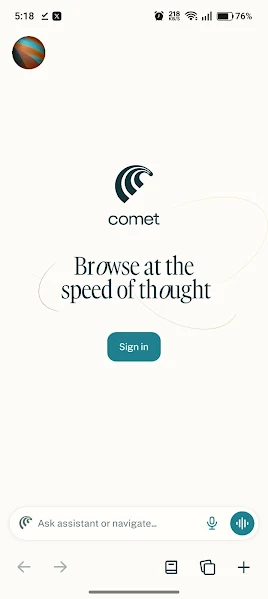
A typical user starts by opening the browser and using it like any other Android browsing app. They visit websites, search for topics, and keep multiple tabs open when they want to compare information or continue reading later. This familiar start makes the app easier to approach even for people who have never used an AI browser before.
The next step is usually asking the assistant for help with whatever is already open. Someone reading several news stories might ask for a summary of the different angles. A person checking products might ask for the practical differences between pages. In that sense, usage becomes less about manual note taking and more about guided interpretation.
Users can also use voice interaction when typing feels slower or less convenient. That is useful for quick questions, follow-up prompts, and hands-free moments during mobile browsing. For some people, this becomes the feature that turns the browser into a more natural daily tool.
Over time, the app is likely most useful when users learn to combine ordinary browsing with targeted assistant requests. Instead of expecting AI on every page, they can use it where it saves time most clearly, such as summarizing long articles, reviewing several tabs, or narrowing down next actions in a web task.
How to Download and Install the App
You can download Comet AI Browser directly from our website and begin the setup from there. This keeps the process simple for users who want the file and the installation steps in one place. Before installing, it helps to make sure your phone has enough free space and is running a compatible Android version.
After downloading the app file from our website, open the file on your Android device and follow the installation prompts. If your phone asks for permission to install apps, allow the step that lets you continue with the setup. The prompts can vary slightly by Android brand and version, so the screens may look different from one device to another.
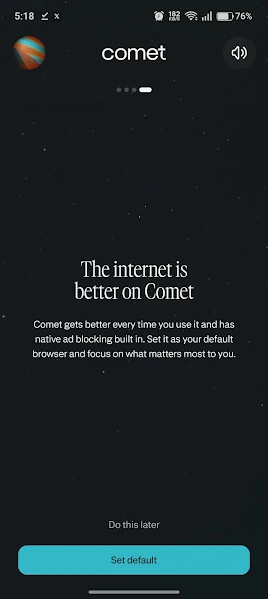
Once installation finishes, open the browser and complete any first-launch setup screens. You may be asked to sign in, choose preferences, or set the browser as your default option for opening links. These steps help the app fit into your normal browsing routine more smoothly.
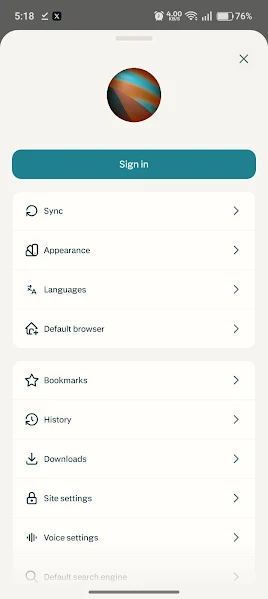
If you plan to use assistant features often, it is also worth checking permissions and basic settings after the first launch. This can include voice access or other feature prompts that shape how the browser works on your device. A few minutes spent on setup usually makes everyday use feel better later.
Quick Install Steps
- 1 Download Comet AI Browser directly from our website.
- 2 Open the downloaded app file on your Android device.
- 3 Allow the required install permission if Android prompts you.
- 4 Complete the installation and open the app.
- 5 Follow the onboarding steps and set preferences.
- 6 Start browsing and use the assistant features as needed.
Device Compatibility
Android Phones
Comet AI Browser is most clearly aimed at Android phone users. Its browsing style, voice interaction, and tab-based assistant features fit the everyday mobile workflow that phone users rely on.
Android Tablets
The app can also suit Android tablets where larger screens make multi-tab reading and assistant-supported browsing easier to manage. Tablets may be especially useful for longer research sessions or comparison-based browsing.
Modern Android Versions
Public app listings suggest that newer Android versions may be needed for the full experience. Users with current devices are more likely to get smoother performance and broader feature access than people using much older Android builds.
Why This App Is Useful
Comet AI Browser is useful because it cuts down on the split between browsing and interpreting. Many people already use a browser to open pages and a separate AI tool to explain them. When those steps come together, the overall browsing flow becomes simpler and more efficient, especially on mobile.
It also helps users who deal with information overload. Reading multiple tabs on a phone can be tiring, and important points are easy to miss when pages are long or repetitive. A browser that can summarize and compare material gives users a faster path to the useful part of what they opened.
Another practical benefit is that the app supports different browsing styles. Some users want to type, others prefer voice, and many want a cleaner page view with less ad clutter. By combining those needs in one browser, the app becomes more flexible than a basic web tool.
The browser may also be useful for people who want to experiment with AI-native browsing without changing their entire digital routine. They can still browse websites in a familiar way while gradually using assistant features where those features actually save time. That balance makes the app easier to adopt in real everyday use.
Pros and Cons
Pros
- Built around AI-assisted browsing on Android
- Helpful for summaries across multiple tabs
- Voice interaction adds hands-free convenience
- Built-in ad blocking can reduce clutter
- Useful for reading, comparison, and quick web tasks
Cons
- Feature experience may vary by Android device
- Some users may prefer a simpler standard browser
- Newer Android versions may be more suitable
- AI-supported browsing may require adjustment at first
Screenshots


Frequently Asked Questions
Comet AI Browser is an Android web browser with built-in AI assistance for browsing, summaries, tab-aware help, and task support.
Public listings show a free app with in-app purchases, so basic access may be available without upfront payment while some features or plans may vary.
It is designed for Android devices, especially phones, and may also work well on Android tablets depending on device support and Android version.
Public descriptions indicate that it can work across open tabs, which means summaries and understanding are not limited to a single page.
Yes, public app information highlights voice-based interaction so users can talk with the assistant while browsing.
Yes. Users can download Comet AI Browser directly from our website and follow the installation steps provided on the site.
Conclusion
Comet AI Browser brings together mobile browsing, AI help, and task-oriented support in a way that fits modern Android use. For users who want summaries, cross-tab help, voice interaction, and a cleaner browsing flow, it offers a more guided alternative to a standard browser. Its real appeal comes from making web activity feel more assisted without taking away the familiar parts of browsing.